


Posts Header

10 Loading and hauling

Covers material movement operations, including loading, transport, unloading, and fleet optimization.

Operational insights on cycle times, fleet sizing, conveyors, and productivity improvement.

ZVENIA Mining
Corporate at ZVENIA 30/11/2025

The Science of Haul Road Economics

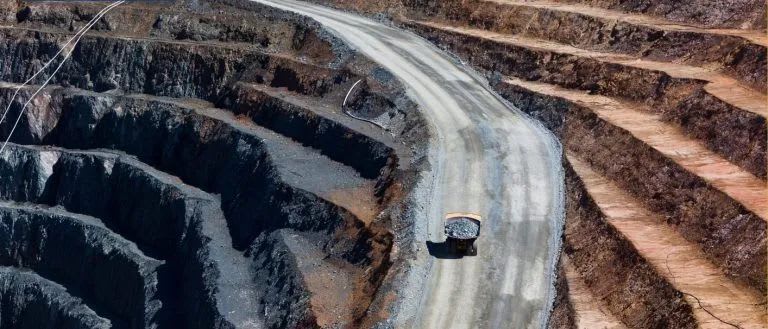
Mine Manager’s Playbook Series Haul roads look simple. They are not. They are the biggest hidden cost centre in open-pit mining. A shovel can be world-class. A fleet can be brand new. Explosives can be perfect. But if the haul road is bad, the mine becomes slow, expensive, and unproductive — every single hour. The Financial Truth No One Talks About Every 1% increase in rolling resistance causes 10% loss in truck productivity. Just one soft patch, one wet curve, one ungraded segment… and your entire fleet behaves underpowered. You won’t see this in fuel sheets. You won’t see it in daily MIS. You’ll only see it in the total cycle time, the silent killer of mine economics. Where Haul Roads Drain Money 1️⃣ Fuel Burn Bad roads increase diesel consumption by 15–35%. Multiply that by 20–30 trucks and the numbers become brutal. 2️⃣ Payload Loss Operators start playing safe. “Almost full loads” replace full loads. You lose BCM quietly. 3️⃣ Tyre Life Crash Rough roads kill tyres 40–60% faster. Each tyre costs USD 3,000–5,000. A road can wipe out your tyre budget faster than any operator mistake. 4️⃣ Shovel Starvation Slow trucks → empty shovels → lost tonnes → lost month-end targets. 5️⃣ Maintenance Backlog More braking = more heat = more failures. Your workshop gets punished for road issues. The Core Science A Mine Manager must master one chain: Geometry → Rolling Resistance → Speed → Cycle Time → Cost/BCM → Profitability Fix this chain and your mine performance transforms. Four Engineering Truths • Geometry: Gradient, curvature, super-elevation. A truck runs on engineering, not hope. • Surface Quality: Corrugation, ruts, potholes — these are cost signals, not “road conditions.” • Width & Berms: If operators feel unsafe, they reduce speed. Safety and speed go together. • Drainage: Water destroys most haul roads. Poor drainage destroys the rest. The Behaviour Side (Most Ignored) Good road design loses 50% of value if behaviour is poor: – lane discipline – over-speeding on straights – shortcuts on curves – inconsistent water bowser cycles – reactive grading instead of scheduled grading Road science is half engineering, half discipline. The Most Important KPI in Open-Pit Mining Not fuel burn. Not tyre cost. Not tonnes per hour. It’s “Average Speed on Loaded Haul.” Increase it by even 1 km/h, and your mine’s monthly profit moves instantly. Mine Manager’s Non-Negotiables ✔ Grade every shift ✔ Maintain drainage religiously ✔ Enforce lane discipline ✔ Prevent truck queues at shovel ✔ Measure rolling resistance weekly ✔ Audit roads using drones ✔ Make road quality a production KPI Because the truth is simple: Mines rarely lose money in digging. They lose it on the road.

Source: Credit to Mahesh Raheja
The Science of Haul Road Economics
Mohamed Coulibaly
Mining Engineering at LMSA 13/10/2025

Les Méthodes et Techniques de Mises à Terril dans les Mines à Ciel Ouvert

Le transport établit la liaison entre le fond de la carrière et le point de déchargement des produits (stérile et minerai). Il a pour objet non seulement de déplacer des minerais mais aussi des stériles qui représentent souvent la principale partie de la circulation des produits dans une exploitation à ciel ouvert. L ’objet du transport étant l ’évacuation des minéraux utiles et des stériles, le minéral est transporté dans des ateliers d ’enrichissement, des usines, des stations électriques et des gares de chemin de fer pour être expédié aux utilisateurs. Les stériles sont mis en terrils. Ceux-ci sont placés en dehors des limites du gisement en cours d’exploitation ou bien dans le vide de l ’exploitation. Dans le premier cas, les terrils sont dits extérieurs, dans le second, intérieurs. Qu’ils soient intérieurs ou extérieurs, les terrils ont soit un seul, soit plusieurs gradins et peuvent s’étendre par déplacement parallèle, en éventail ou en anneau du front des déblais.

Emin Tagiyev
Mining Engineering student at SOCAR 12/10/2025

Loading and Hauling in Open-Pit Mining – The Heart of Production

Loading and hauling are the most important parts of open-pit mining. They are the heart of the production process because they connect the blasting area to the crusher or processing plant. Without good loading and hauling, no mine can work efficiently. These two operations take a large part of the total mining cost, but they also decide how fast and how safely materials can be moved from the pit. After blasting, large pieces of rock are ready to be taken out. The loading process starts when the broken rock, called the muck pile, is ready for equipment like shovels, loaders, or excavators. These machines pick up the rock and load it into haul trucks. The size of the shovel and the number of passes needed to fill a truck depend on the bucket capacity and the size of the truck. Operators must load carefully to avoid overfilling, spillage, or damage to equipment. The position of the shovel and truck is also important because it affects how quickly the loading cycle can be completed. The faster the loading cycle, the higher the production rate of the mine. Good fragmentation from blasting helps the loading process. If rocks are too large, it takes more time and effort to fill each bucket. When the rock is well fragmented, the shovel can work faster, use less fuel, and cause less wear on its parts. Every second saved during loading helps increase productivity and lower costs. After loading, the hauling process begins. The haul trucks move the material from the pit to the crusher, stockpile, or waste dump. Hauling is one of the most energy-consuming and costly activities in mining, so efficiency is very important. Large mining trucks can carry between 40 and 400 tons of material in one trip. Their performance depends on road design, distance, gradient, and traffic conditions. If the roads are rough or too steep, the trucks use more fuel, move slower, and need more maintenance. A normal haul cycle includes spotting the truck under the shovel, loading it, driving to the dumping point, unloading the material, and returning to the loading area. This cycle repeats continuously. The goal is to reduce waiting time and keep trucks and loaders working in harmony. Delays in loading or traffic jams on the roads can cause production losses, so coordination between operators is essential. Haul roads are very important for safe and smooth operations. They must be wide enough for trucks to pass safely and have a gentle slope so trucks can climb without losing power. The surface should be firm, well-drained, and graded often to remove potholes. Dust control is also critical because too much dust can reduce visibility and cause accidents. Water trucks or dust suppressants are often used to keep the roads clean and safe. In modern open-pit mines, technology is used to make loading and hauling more efficient. GPS systems track each truck and show where it is, how much it carries, and how long each cycle takes. Fleet management systems automatically plan which truck goes to which shovel, reducing idle time and improving fuel use. Some mines now use autonomous haul trucks that can move without drivers, which increases safety and consistency. Drones are used to check road conditions, measure stockpiles, and map the pit accurately. Safety is the most important rule in loading and hauling. Operators must always check their machines before use and follow traffic rules inside the mine. Clear communication between shovel operators and truck drivers prevents accidents. Speed limits, warning signs, and good lighting help keep everyone safe. Training programs teach workers about fatigue, attention, and safe equipment handling. Efficiency and sustainability are also key goals. Because fuel is expensive and polluting, many mines are using electric or hybrid trucks, better engines, and trolley-assist systems to reduce fuel use and emissions. Monitoring systems track performance indicators such as tonnes moved per hour, cycle time, and cost per tonne hauled. These data help managers find problems and improve operations. The success of loading and hauling depends on teamwork. Shovel operators, truck drivers, dispatchers, mechanics, and supervisors must work together. When one part of the system slows down, the whole operation is affected. Communication and cooperation keep everything moving smoothly. In the end, loading and hauling are more than just moving rock — they are the power that drives open-pit mining. They decide how productive, safe, and sustainable a mine can be. Every bucket loaded and every truck hauled is part of a cycle that turns natural resources into materials that build our roads, bridges, and cities.

Paulo Lopes
Mining Engineer at Beyond Mining 27/09/2025

Modelagem matemática em fluxo de material fragmentado com foco em mineração subterrânea (2012)

[PT] O estudo analisa o fluxo por gravidade de material fragmentado em minas subterrâneas e critica modelos clássicos que consideram apenas parâmetros geométricos, desconsiderando o comportamento mecânico do material. Apresenta-se uma análise da influência da espessura da fatia de minério e da excentricidade do elipsoide de movimento na recuperação e na diluição da lavra, demonstrando a importância da eficiência do fluxo para o método de abatimento em subnível. O trabalho propõe um novo modelo matemático baseado em parâmetros geomecânicos e geométricos para simular o fluxo de materiais granulares. [EN] This article addresses gravity flow of fragmented material in underground mines and critiques traditional models that rely solely on geometric parameters while neglecting the mechanical behavior of the material. The authors analyse how the slice thickness and the eccentricity of the ellipsoid of movement affect ore recovery and dilution, highlighting the importance of flow efficiency in sublevel caving operations. They propose a new mathematical model that incorporates both geomechanical and geometric parameters to simulate granular flow more realistically.

Mohamed Tawfig Khogali Wahbi
Mining Eng 05/09/2025

Ramps & Haul Roads — The Arteries of Open Pit Mining

In open pit mining, ramps and haul roads are more than just pathways—they are the lifelines that keep ore moving and costs under control. According to Poniewierski (2021), “A good haul road design is one where the operator can drive from the face to the dump with their foot flat to the floor, except for safety speed limits.” Here are some key insights from industry guidelines: 🔹 Gradient Matters – In Australia, a 10% gradient is common for rigid trucks, but in North America, 8% is preferred. Why? Caterpillar data shows that moving from 10% to 8% can double the lifespan of critical components like differentials and wheel groups, reducing costs significantly. 🔹 Width for Safety – For two-way straight sections, aim for at least 3.5× truck width, increasing to 4× truck width on corners. Always add windrows at least half the tyre height for safety. 🔹 Switchback Design – Flat switchbacks are best for mechanical drive trucks, reducing drivetrain stress. If graded, the inside radius should be 2–3% flatter than the main ramp to offset rolling resistance. 🔹 Direction of Travel – Whenever possible, design ramps so loaded trucks travel clockwise upwards with the driver’s cab toward the pit wall—improving visibility and reducing the risk of catastrophic edge failures. 🔹 Drainage & Pavement – In wet or tropical climates, proper drainage and pavement thickness (up to 3 m in poor ground) must be factored into the geometric design to maintain performance. Bottom line: A well-designed haul road saves money, boosts productivity, and—most importantly—keeps people safe. As Thompson (2015) notes, “A safe system acknowledges that humans are fallible… the road system must allow for these errors to minimise hazard.” You can read more here: https://www.deswik.com/whitepapers/guidelines-and-considerations-for-open-pit-designers

Source: Credit goes to Eng. Martine Mshana
Ramps & Haul Roads — The Arteries of Open Pit Mining
Kwame Amponsah Yeboah
Mining Engineer at University of Mines and Technology 01/09/2025

Professional Certificate in Mine Excavation & Materials Transportation

🚜 Are you a mining engineer, technician, operations supervisor, or student in mining-related fields? Gain expert skills with the Professional Certificate in Mine Excavation & Materials Transportation — a 7-in-1 online course by the University of Mines and Technology, Tarkwa 📦 Master key concepts in production planning, equipment operations, material handling, transportation systems, and more! ✅ Ideal for boosting efficiency, improving safety, and advancing your mining career. 📅 Date: 24th Nov – 16th Jan 2026 💼 Fee: GH₵3500 | 🎓 45% Discount for Students 💻 Mode: Online 📞 Enroll Today: 0555674546 / 0207702157 / 0541603237 Continue to like, follow, post and share ZVENIA.com

Professional Certificate in Mine Excavation & Materials Transportation
ZVENIA Mining
Corporate at ZVENIA 09/07/2025

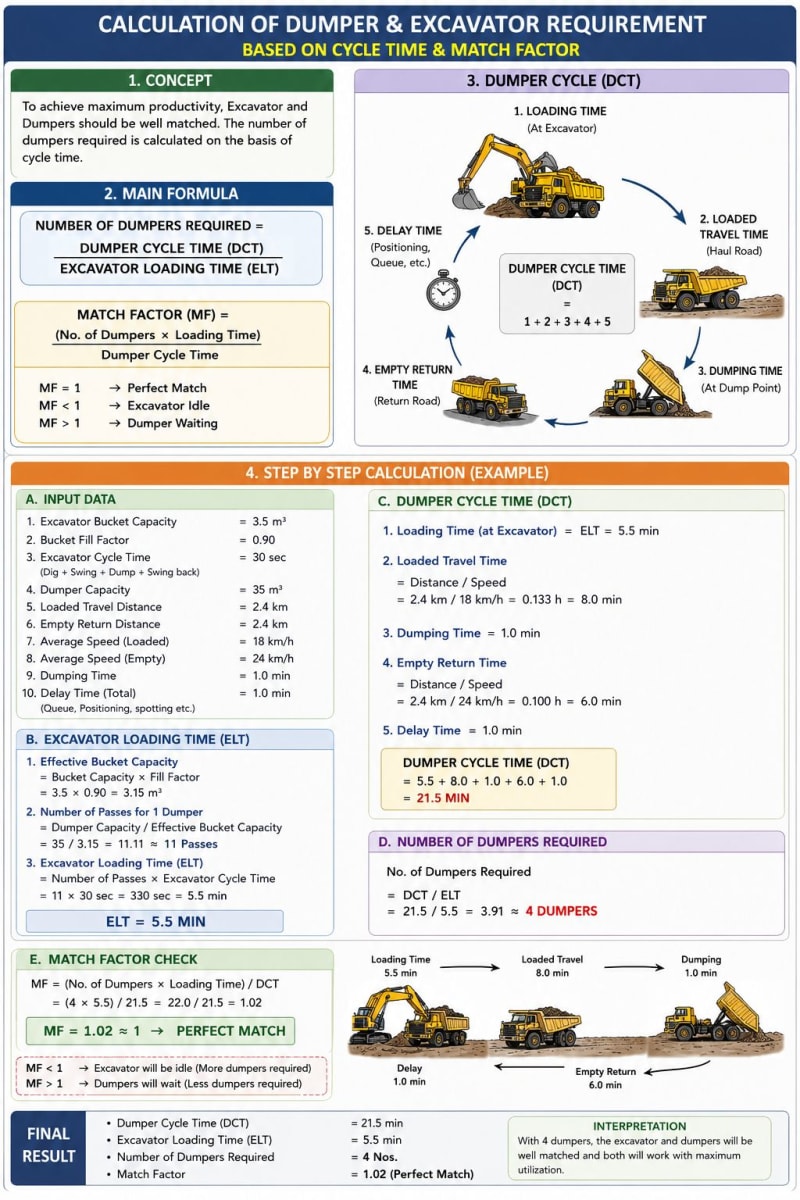
Matching excavator and truck cycle times is critical for efficient mining operations.

To ensure continuous excavator operation with no idle time, the required number of dump trucks must be calculated using: Rule of thumb Number of Trucks = Truck Cycle Time ÷ Excavator Loading Time Example: Truck cycle time = 8 minutes Excavator loading time = 2 minutes → 8 ÷ 2 = 4 trucks (theoretical) However, real-world operations involve delays: -Dumping queue -Road conditions -Minor inefficiencies That's why we always add a buffer truck to avoid excavator downtime. So in this case: 5 trucks would be required in practice. Proper fleet balance ensures higher productivity and reduces fuel waste and idle time.

Source: Credit to Washington Mokwena
Matching excavator and truck cycle times is critical for efficient mining operations.
ZVENIA Mining
Corporate at ZVENIA 17/06/2025

Fuel Ratio Optimization for Hauling Activities

As a Mine Plan Engineer in the nickel mining, especially in mining contractor, one of my core responsibilities is ensuring that all operational activities to run efficiently, safely, and sustainably. In this discussion session, I collaborated with production team to analyze our fuel ratio. While it may seem like a purely technical metric, this number serves as a key indicator of our equipment's performance and operational efficiency in the pit. To reduce fuel ratio and improve hauling performance, we focused on several measurable indicators, including: ✅ Grade Optimization – Reducing grade of road where possible to minimize engine load. ✅ Rolling Resistance Management – Ensuring regular road maintenance (watering, grading, compacting) to reduce energy loss. ✅ Cycle Time Analysis – Evaluating loading, travel, and dumping times to minimize idle time and improve cycle efficiency. ✅ Payload Management – Monitoring truck loading to avoid underloading or overloading, which both negatively affect fuel usage. ✅ Speed & Gear Utilization – Ensuring proper driving behavior to match road profiles with the most fuel-efficient gear and speed settings. ✅ Refueling & Staging Strategy – Reducing unproductive travel by strategically locating fuel stations and optimizing standby areas. Fuel ratio optimization is not only about cost control, it's also a part of our strategy to support energy sustainability and reduce the carbon footprint of our mining operations. We reviewed historical data, current field conditions, and identified potential areas for improvement. Such as route optimization, cycle time efficiency, and equipment utilization strategies. Cross functional discussions like these are essential. Challenges in the field are rarely solved alone. They require team collaboration, open communication, and a shared understanding of the company’s long term goals. 💡 Mining smarter, not just harder.

Source: Credit to Muhammad Dwitri Candika Indrawan
Fuel Ratio Optimization for Hauling Activities
ZVENIA Mining
Corporate at ZVENIA 16/06/2025

The $25M lesson that changed how I approach fleet strategy

We were advancing a feasibility with a vision for a full BEV underground fleet, a true "mine of the future". 90 pieces of gear designed to deliver on ESG, innovation, and long-term value. It was a model case of progressive mine design - but that commitment came with a trade-off. BEVs cost 20-30% more upfront than diesel, and capital was tight - so we took a step back: Trucks and LHDs? High utilization, clear productivity gains - BEVs made sense Drills and support vehicles? Often stationary. Low engine hours. Easy access to power - the business case wasn't there. We proposed a hybrid fleet - BEV where it moved the needle, diesel where it didn't. The result? It saved $25M in upfront capital. The takeaway: Sometimes the future is built in phases, not leaps. Effective fleet strategy balances ambition with practicality - aligning with the levers that matter most. We didn't abandon the future. We made it achievable. How are you approaching major tech shifts in your mine plans?
Source: Credit to Brian Villeneuve
The $25M lesson that changed how I approach fleet strategy
ZVENIA Mining
Corporate at ZVENIA 17/05/2025

Operación segura y eficiente del cargador frontal CAT 966 en minería a cielo abierto*

El cargador frontal CAT 966 es una herramienta esencial en la minería a cielo abierto, desempeñando un papel clave en la carga, transporte y manipulación de materiales pesados. Para garantizar su uso seguro y eficiente, aquí te comparto sus principales funciones, medidas de seguridad y recomendaciones: 💼 **Funciones principales** ✅ **Carga y transporte:** Retira material del frente de carga y lo deposita en camiones o tolvas. ✅ **Excavación y nivelación:** Ideal para mover tierra y nivelar superficies. ✅ **Manipulación de materiales pesados:** Su cuchara robusta permite manejar grandes volúmenes de material de forma eficiente. 🛡️ **Medidas de seguridad imprescindibles** ✔️ **Inspección previa:** Asegúrate de que el equipo esté en óptimas condiciones antes de operar. ✔️ **Visibilidad y iluminación:** Verifica las luces de trabajo y la iluminación del área. ✔️ **Acceso seguro:** Utiliza siempre la técnica de tres puntos de apoyo al subir y bajar del equipo. ✔️ **Evaluación del entorno:** Considera el terreno y las condiciones climáticas antes de iniciar la operación. ✔️ **Mantenimiento preventivo:** Mantén un registro estricto de mantenimiento y detén la operación ante fallas críticas. 📌 **Recomendaciones para una operación eficiente** 🔹 **Capacitación:** Solo personal habilitado debe operar el equipo. 🔹 **Distancias de seguridad:** Respeta los espacios adecuados para prevenir accidentes. 🔹 **Control de fatiga:** Implementa relevos y monitorea el estado físico del operador. 🔹 **Carga adecuada:** No excedas la capacidad máxima y verifica el tamaño del material antes de cargar. 💡 **Consejos clave para operadores** 🔧 Realiza inspecciones previas: Revisa neumáticos, niveles de aceite, frenos y luces antes de comenzar. 🪑 Ajusta el asiento: Mantén una postura cómoda y segura durante la operación. 📦 Evita sobrecargas: Protege el equipo y reduce riesgos. ⚙️ Usa técnicas eficientes: Carga el material de forma uniforme para mejorar la estabilidad. 🚦 Respeta las normas de seguridad: Usa cinturón, controla la velocidad y evita maniobras bruscas. 📚 Capacitación continua: Actualízate con las mejores prácticas y tecnologías aplicadas. 👀 Monitorea el entorno: Mantén una visión clara del área de trabajo y comunica tus movimientos. El cargador frontal CAT 966 no solo es una herramienta de gran capacidad, sino también una pieza que requiere habilidad, conocimiento y compromiso con la seguridad. ¿Qué otras prácticas agregarías para optimizar su operación?

Source: Credit to Roberto Flores
Operación segura y eficiente del cargador frontal CAT 966 en minería a cielo abierto*
ZVENIA Mining
Corporate at ZVENIA 15/05/2025

Truck and shovel queue visualisation (8 pages)

Hey all, my latest article is ready. Lifting the curtain on some of my takes on truck and shovel queue visualisation. Please share with your network if you like this one! It really helps me. Thanks Information Alignment for the data capability. 👇 The Levels of Queue Visualization Level 0: Not tracking queue time? Yikes! Level 1: The Numbers Speak Level 2: The Picket Fence Level 3: Downtimes Added Level 4: Bring in the Distro's Level 5: Go nuts lol BOSS LEVEL: Real-time baby! Animated Queue: https://youtu.be/9KWZVW0pDEI?si=TBBbhAJBrQzsUTgT

Source: Credit to Harry Finn
ZVENIA Mining
Corporate at ZVENIA 06/05/2025

Every Second Doesn't Matter... Until You Realize It Does

At the mine, we used to think in minutes even bigger like hour, shift, daily. Then we learned to think in seconds after Fleet Management System been implemented. When the FMS breakdown of a 24-minute haul cycle was first seen: 🎯 Waiting = Queuing: 90s 🎯 Spotting: 30s 🎯 Loading: 120s 🎯 Hauling: 675s 🎯 More waiting = Queuing: 15s 🎯 Maneuvering: 15s 🎯 Dumping: 15s 🎯 Returning: 491s Those 15-90 second loss that everyone accepted as normal were almost missed. Each "just 15-90 seconds": 🔻 Cost 1.5 cycles per truck daily 🔻Meant 63 m³ left unmoved every shift 🔻Added up to 37,800 m³ annually per truck Suddenly, seconds weren't so small anymore. We can optimize that using Fleet Management System: 45s saved by optimizing haul routes 15s saved through better spotting 30s reclaimed by eliminating unnecessary stops The Lesson Learned Productivity isn't about heroic efforts - it's about: 🔼Seeing what's invisible (until measured) 🔼Fixing what's "too small to matter" (until it does) The difference between good and great operations isn't measured in hours or minutes - it's counted in seconds that nobody notices... until someone starts counting. cr picture :Chaowasakoo, Patarawan & Seppälä, Heikki & Koivo, Heikki & Zhou, Quan. (2017). Digitalization of mine operations: Scenarios to benefit in real-time truck dispatching. International Journal of Mining Science and Technology. 27. 10.1016/j.ijmst.2017.01.007.

Source: Credit to Decki Hadi
Every Second Doesn't Matter... Until You Realize It Does
Moses Simfukwe
Member 05/05/2025

Dumping Operations

While on shift after some slight rains, we had this truck that was dumping at the dump and seriously got bogged with a higher chances of causing damage to the underneath components. The rear tyres were gradually sinking due to slumping ground conditions. To recover it, we quickly hooked it with a string to a stationary Dozer in front to give it some forward pull or tension and got another Dozer to start dropping a mini ramp on the rear of the truck. Upon completion, we instructed the truck operator to slowly reverse to about 3m and cleared it's front, by cutting the ground for easy ramping of the truck, and just like that, we tried driving forward and: Boom.. it was a win! we were able to recover the truck with no deformations or damage to the truck, it was whole lot of celebration with the team. Here is a few points to remind us on dump management and procedures. 1)Inspect dump edge for cracks, slumping, or water saturation. 2)Confirm berm/windrow is in place and minimum ½ wheel height. 3) Check that the ground is compacted and stable. 4) Ensure the dump zone is clear of loose material. TRUCK POSITIONING 1) Align truck perpendicular to the edge with enough space for turning. 2) Maintain a safe distance (at least 3-5 meters) from the berm. 3) Use a spotter or camera system to guide reversing. DUMPING PROCEDURE 1)Dump: 3–5 meters from the edge. 2) Avoid sudden tipping of the body—raise slowly. 3) Maintain radio or hand-signal communication between Operator and spotter. Last but not the least, be observant of any changes in ground/floor conditions and call for the appropriate course of action.

Dumping Operations
Abel Maseka
Mining operator at MCK 24/04/2025

Principles of operating a rigid dump truck (RDT)

The basic principles of operating a rigid dump truck (RDT) are the same regardless of size, but there are some key differences depending on the truck’s capacity and features. Here’s what matters: Similarities in Operation (All Sizes) ✔ Starting and Stopping Procedures – Pre-operation checks, ignition, gear shifting, and braking are similar across all RDTs. ✔ Basic Controls – Steering, throttle, braking, and dump functions operate similarly. ✔ Safety Protocols – checking blind spots, using mirrors/cameras, and following site rules apply to all sizes. ✔ Driving Techniques – Uphill, downhill, and turning maneuvers follow the same principles, though adjustments are needed for different sizes. Differences Between Small and Large Rigid Dump Trucks ⚡ Size and Weight Considerations – Larger RDTs have a higher center of gravity, requiring more careful cornering and braking. ⚡ Braking System – Bigger trucks use more advanced retarder and braking systems to handle their weight. ⚡ Maneuverability – Smaller RDTs are more agile, while larger ones have a wider turning radius and require more space. ⚡ Hydraulics and Dumping – Larger RDTs may have more powerful hydraulic systems, affecting dumping speed and control. ⚡ Visibility and Blind Spots – Bigger trucks have more blind spots, requiring greater reliance on cameras and spotters. ⚡ Technology and Features – Modern large RDTs may have GPS, automated controls, and operator-assist features not always found in smaller models. Komatsu 960

Principles of operating a rigid dump truck (RDT)
Abel Maseka
Mining operator at MCK 05/03/2025

Optimal Cycle Time

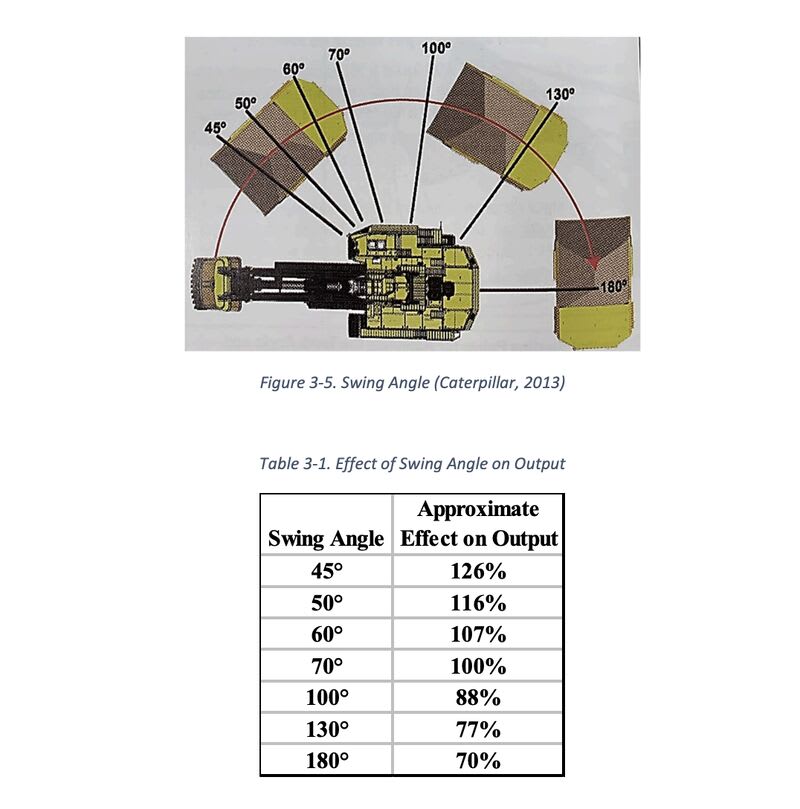
Are you asking about the optimal cycle time for dump trucks in relation to an excavator's digging flow? If so, the cycle time depends on several factors: 1.Excavator Digging Speed– How quickly the excavator can fill a truck. 2.Dump Truck Capacity – Larger trucks take longer to fill but reduce trips. 3.Haul Distance & Road Conditions – Longer or rougher routes increase cycle time. 4.Dumping Efficiency – Time spent unloading and returning. 5.Number of Trucks – More trucks reduce excavator idle time but require coordination. A well-balanced system ensures the excavator is never waiting for a truck, and trucks are not idling excessively. Do you need help optimizing a specific operation?

Optimal Cycle Time

Preview of ZVENIA Mining

Sign up to get unlimited content. No credit card needed.

Sign Up Free