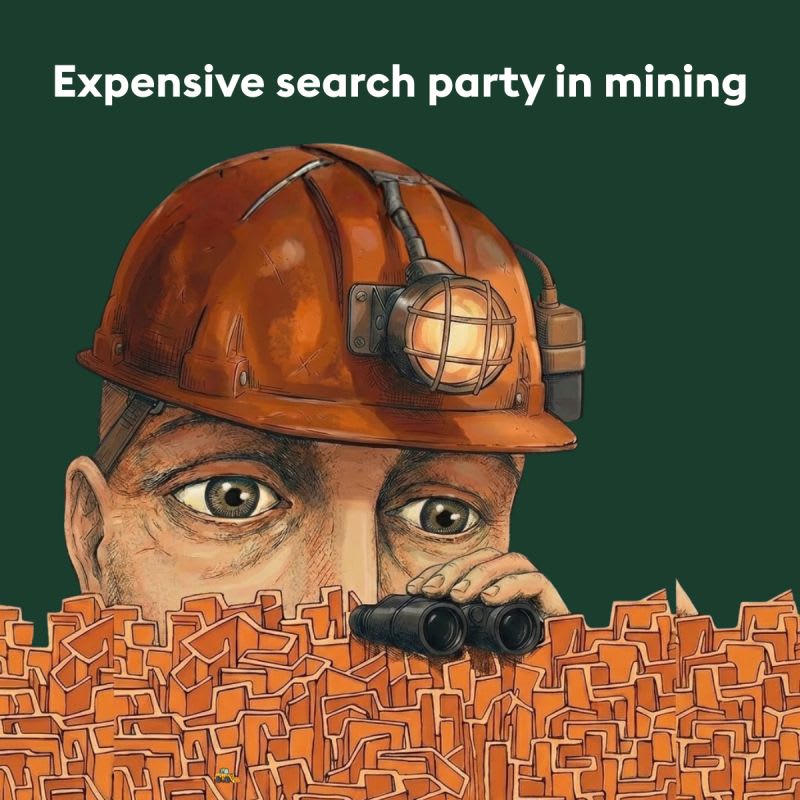
The most expensive search party in mining happens every single shift
I find it fascinating that an industry capable of extracting value from kilometers beneath the earth's surface still relies on radio calls and walking around to locate a missing loader, and that this reality is so normalized that nobody seems particularly bothered by it. Supervisors at underground operations still hunt for equipment the same way they did thirty years ago. When something isn't where it's supposed to be, the search begins. Radio calls go out and often go unanswered or get garbled in the interference that plagues underground communications. Someone gets dispatched to check the last known location. Another person checks the workshop. The whole process can easily consume 30 minutes or more. What strikes me most about this isn't the time lost to the search itself. The real cost is everything that stops moving while one person tries to figure out where one piece of equipment has gone. There is no line item anywhere in any report that captures "time spent figuring out where things are." It gets absorbed into shift variances, attributed to operational complexity, or simply accepted as how underground mining works. The cost is real but invisible. Most of the time, the information exists somewhere in the system. The operator knows where the loader is. But that knowledge lives in people's heads, and the moment those people leave site, the institutional memory disappears. So the next supervisor, on the next shift, facing the same missing equipment problem, starts the search from scratch. I'm curious how many operations have ever actually measured how much of their shift productivity disappears into the gap between where equipment should be and where it actually is. My suspicion is that most haven't, because the answer would be uncomfortable. The technology to solve this problem has existed for years. Real-time location systems are nothing new in logistics, warehousing, and manufacturing. Outside of mining, hybrid RTLS technologies are projected to exceed 55% adoption as companies recognise the operational intelligence that comes from knowing where everything is at all times. Yet mining remains hesitant, and when you dig into why, you find objections that have less to do with technology and more to do with culture and legacy infrastructure. Connecting RTLS with legacy dispatch systems, ventilation controls, and task management platforms that were never designed to talk to each other requires patience and investment that many operations struggle to justify when the benefits remain invisible in current reporting. At IRH, we see this differently. The integration problem is solved by building platforms that were designed from the beginning to unify data streams and integrate with any legacy system. This is why we've built location intelligence into the core of our operating system rather than treating it as another standalone module that needs to be connected later.