How In-Situ Joints Affect Explosive Energy Distribution During Blasting
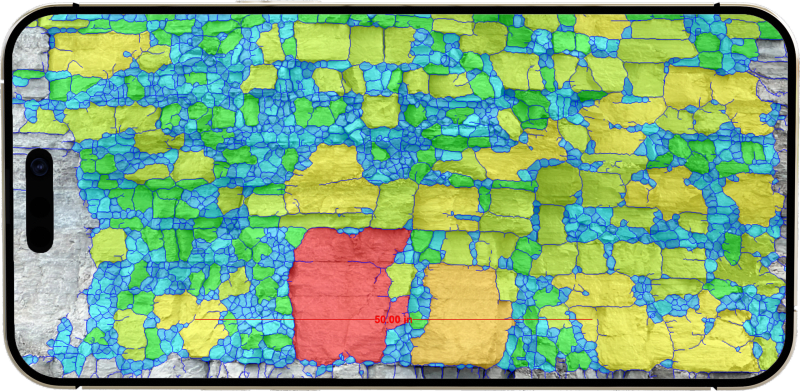
How In-Situ Joints Affect Explosive Energy Distribution During Blasting Rock masses in mining and quarrying environments are rarely intact; they are intersected by natural joints, fractures, and bedding planes. These in-situ discontinuities significantly influence how explosive energy is transmitted and utilized during blasting. When properly understood and incorporated into blast design, they can aid fragmentation. However, when ignored, they may lead to inefficient energy usage and poor blast outcomes (See attached Video). Impact of In-Situ Joints on Energy Distribution Explosives generate high-pressure gases intended to create new fractures and displace rock. In a massive, competent rock with minimal joints, most of this energy contributes directly to breakage. However, in jointed rock masses, energy behaves differently. Joints weaken the structural integrity of the rock, providing planes of weakness through which energy can escape. If the existing joints are not accounted for, explosive energy may simply displace in-situ rock blocks along these planes rather than fracture them (See attached Video). Instead of breaking the rock into controlled fragments, the blast may push intact blocks outward, resulting in oversize fragments, back-break, and uneven muck profiles. This inefficiency increases downstream processing costs and reduces overall blast performance. Using WipFrag to Analyze In-Situ Blocks and Joint Orientation Modern photo-analysis tools offer a practical solution for evaluating geological structures before and after blasting. With WipFrag, blasters can take pictures of the bench face to analyze joint orientation and in-situ block conditions. This information is critical for determining the appropriate burden and spacing, especially for the first row of blast holes where rock structure strongly influences burden relief. The WipJoint tool enhances this capability by providing detailed assessments, including: 1. Joint spacing 2. Apparent Joint orientation 3. Rock Quality Designation (RQD) 4. In-situ block size distribution 5. Joint frequency across the face These parameters help blasters understand the structural geology of the bench and design more effective blast patterns tailored to the rock mass. After the blast, blasters can capture images of the muck pile with WipFrag to evaluate how well the fragmentation matches expectations. Comparing pre-blast joint conditions with post-blast fragmentation results allows engineers to refine designs and continuously improve blast performance. Both capabilities are available and fully accessible on WipFrag 4. Download the software here (https://lnkd.in/dAVP7Py9) and create a free account today. Then share your WipFrag username along with a short sentence about what you plan to use the software for, and you could win free demo credits to analyze at least one image at no cost.